Most Emergency Air Conditioning Calls Don't Start as Emergencies
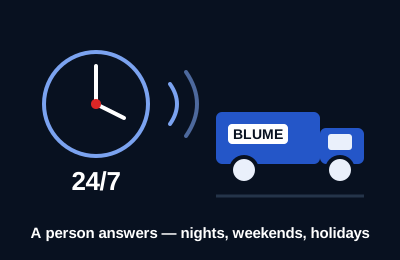
An air conditioner rarely quits without warning. It drops hints, sometimes for weeks, before it finally stops cooling on the hottest afternoon of a Tampa Bay summer. Blume Mechanical Service has been in the climate business since 2009, and the pattern behind an emergency air conditioning call is familiar: a small problem that would have been a quick fix on a scheduled visit gets ignored until it takes the whole system down. If your AC is already dead, call (727) 330-9131; a person answers the 24/7 dispatch line, holidays included. If it is still limping along, the sections below can help you avoid the emergency entirely.
The Early Warning Signs of an AC Emergency in the Making
Cooling failures almost always telegraph themselves. The trick is knowing which symptoms are cosmetic and which mean a component is on its last legs. Here is how our experienced technicians read the signs.
Sounds That Mean Trouble
A healthy system makes a steady hum and the whoosh of moving air, not much else. Grinding or screeching usually points to a motor bearing wearing out, and a motor that seizes in July becomes a no-cool emergency that same afternoon. Loud buzzing from the outdoor unit often means a capacitor or contactor is struggling. Repeated clicking at startup without the compressor kicking on is a system trying and failing to start. None of these fix themselves, and all are cheaper to address before the system dies.
Cooling and Airflow Changes
Pay attention when the system runs longer than it used to, when some rooms stay muggy while others are fine, or when air from the vents feels weak or barely cool. In Florida, rising indoor humidity is often the first clue, because a struggling system loses its grip on moisture before it stops cooling outright. Ice on the refrigerant lines or indoor coil is a hard stop: switch the system off and call, because running it frozen can damage the compressor, its most expensive part.
Electrical Symptoms and Short Cycling
A breaker that trips when the AC starts is the panel telling you the system is drawing more current than it should. Resetting it once is reasonable; resetting it repeatedly is how a failing part becomes a burned-out compressor. The same goes for short cycling, where the unit starts and stops every few minutes. Both point to problems a technician can usually diagnose in one visit, and both tend to end in an emergency air conditioning call when ignored.
Why Tampa Bay Is Hard on Air Conditioners
Prevention matters more here than in most of the country because the local climate attacks equipment from several directions at once. A maintenance habit that would be adequate elsewhere falls short in Pinellas and Hillsborough County.
Humidity and a Nearly Year-Round Run Season
Tampa Bay air conditioners barely get an off-season. Where a northern system might rest for half the year, systems here accumulate run hours the way a work truck accumulates miles. Every hour of runtime also produces condensate, and all of that water has to leave through a drain line that algae would love to colonize. Long run seasons wear out motors and capacitors sooner, turning a marginal component into a failed one faster than the calendar suggests.
Salt Air and Coastal Corrosion
If you live in Dunedin, Clearwater, St Petersburg, or anywhere near the water, salt-laden air is slowly working on your outdoor unit. Corrosion thins condenser coil fins, attacks electrical connections, and eats at the cabinet and fasteners. A coastal system can look fine from the curb while the coil underneath quietly degrades. Rinsing and inspecting the condenser is a small job that meaningfully extends equipment life near the coast.
What a Real Tune-Up Actually Prevents
A tune-up is only worth what it prevents. When our technicians service a system, they are hunting for the specific conditions that generate emergency air conditioning calls later in the season. Three areas do most of that work.
Capacitors, Contactors, and Motors
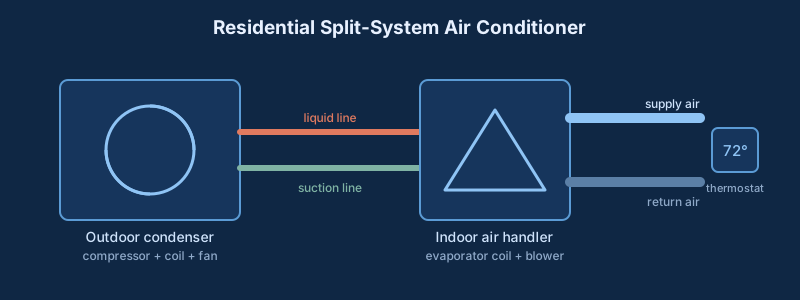
The capacitor gives your compressor and fan motors the jolt they need to start, and Florida heat is brutal on capacitors. A weakening one can be identified with a meter and replaced in minutes during a scheduled visit; left alone, it fails on a hot afternoon and the whole system stops. Pitted contactors and motors drawing high amperage tell the same story: measurable decline, cheap to catch early, miserable to discover at failure.
Refrigerant Charge and Coil Condition
A system low on refrigerant does not just cool poorly; it can freeze the indoor coil solid and shut everything down. Low charge means a leak, and finding a small leak early beats topping off the system year after year, especially on older units running R-22, a refrigerant that has been phased out and only gets harder to source. A dirty condenser coil forces the compressor to work against higher pressure, shortening its life every day it stays dirty.
The Condensate Drain Line
In Florida, the humble drain line is behind a great many no-cool calls. When algae clogs it, a float switch shuts the system off to prevent water damage, and from inside the house it looks like a dead air conditioner. Clearing and treating the drain during maintenance is one of the simplest ways to head off a summertime emergency, and it protects your ceilings and floors too.
When Prevention Didn't Happen: Handling the Emergency You Have Now
If you found this page because the house is already hot, the prevention talk can wait. Here is the sequence we would walk you through on the phone.
Safe Checks Before You Call
Confirm the thermostat is set to cool and, if it uses batteries, that they are fresh. Check the breaker panel; if the AC breaker has tripped, reset it once. If it trips again, leave it off and call, because repeated resets can turn a repairable fault into a destroyed compressor. Check the air filter, since a fully clogged filter can choke a system into shutdown. If you see ice on the copper lines or indoor unit, switch the system off so it can thaw before the technician arrives. If you smell burning, shut everything down at the breaker.
What Happens When You Call Blume
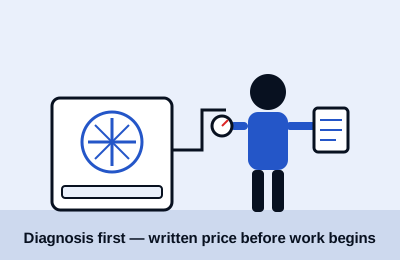
A person answers the 24/7 dispatch line at (727) 330-9131, holidays included. Same-day response is available for no-cool calls, based on location and technician availability. The technician who arrives is experienced and works on all major brands, including Carrier, Trane, Lennox, Rheem, Goodman, Daikin, York, and Bryant. Before any repair begins, you receive written upfront pricing, and nothing happens until you approve it.
After the Breakdown: Repair, Replace, and Honest Math
An emergency is also a decision point, and it deserves clear numbers rather than adrenaline. Our rule of thumb: when a repair on aging equipment costs more than half the price of a new system, replacement usually makes better financial sense. Refrigerant type matters too. If your system runs on R-22, which has been phased out, every future refrigerant repair gets more complicated, and a major failure often signals that the money belongs in new equipment. A good contractor shows you both paths in writing and lets you choose; that is how we handle it.
Replacing on Your Schedule Instead of the System's
There is a prevention angle even to replacement. A system replaced on your timeline can be researched, quoted, and installed at your convenience. A system replaced after a total failure in August gets chosen under pressure while the house bakes. If your equipment is old, the repairs are stacking up, or it still runs R-22, planning the replacement before the emergency is itself a form of prevention, and usually the least stressful one.
A Maintenance Plan Is the Anti-Emergency
The whole point of a maintenance plan is that you stop meeting your HVAC contractor at emergencies. Blume's plans include two tune-ups per year, timed so your system gets checked before the heavy cooling season, plus priority scheduling and discounted repairs when something does come up. Every visit is documented, so each unit carries a written service history, which matters when weighing repair against replacement. Blume Mechanical Service, LLC has been in the climate business since 2009, holds Florida license #CAC-1822618, verifiable through the FL DBPR, and is fully insured. We are headquartered in Belleair Bluffs and serve Pinellas and Hillsborough County, including Tampa, Clearwater, St Petersburg, Largo, Brandon, Dunedin, Palm Harbor, Seminole, and nearby communities. Whether you need emergency air conditioning service tonight or want to make sure you never search for it again, call (727) 330-9131.