
AC Installation in Tampa
If you’re planning AC installation in Tampa, choosing the right system matters for year-round comfort in Florida’s intense heat and humidity. Tampa homeowners often need air conditioning that can handle long cooling seasons, high moisture levels, and sudden temperature swings during stormy months. A properly installed unit helps improve indoor comfort, energy efficiency, and air quality while keeping utility bills under control.
Two common causes that lead homeowners to replace or install a new AC system are aging equipment and poor cooling performance. Older systems tend to lose efficiency over time, require more repairs, and may struggle to keep up with Tampa’s summer demand. Poor cooling performance can also come from an improperly sized unit, which may leave hot spots throughout the home or run constantly without delivering enough cool air.
Before scheduling professional installation, one helpful DIY tip is to check your home’s insulation and seal around windows and doors. Reducing air leaks can improve your new system’s performance and help you get the most from your investment. You can also replace dirty air filters regularly to support stronger airflow and better efficiency from day one.
Whether you’re upgrading an outdated unit or installing AC in a newly built property, local knowledge makes a difference. Tampa homes face unique climate challenges, so working with experienced professionals ensures the system is matched to your space and installed correctly.
Ready to enjoy reliable cooling in Tampa? Contact us today to schedule your AC installation consultation and get a system designed for lasting comfort.
AC Installation in Tampa: What Homeowners Need to Know Before Replacing Their System
If your current air conditioner is struggling to keep up with Tampa’s heat and humidity, it may be time to consider a new AC installation. Choosing the right system is about more than just cooling power. In Florida, your AC also plays a major role in humidity control, indoor air quality, and energy efficiency. A poor installation can lead to higher utility bills, uneven temperatures, and ongoing repair issues.
This guide covers the basics of AC installation in Tampa, including why systems fail, what steps matter most during replacement, typical local costs, and common homeowner questions.
Summary
AC installation in Tampa is not a one-size-fits-all project. The area’s long cooling season, high humidity, salt air, and heavy system usage mean homeowners need equipment that is properly sized and installed for local conditions. A quality installation starts with evaluating your home’s cooling load, ductwork, insulation, and airflow needs. From there, the contractor helps match you with a system that balances efficiency, comfort, and budget.
Most homeowners replace their AC when the existing system is over 10 to 15 years old, requires frequent repairs, or no longer cools effectively. In many cases, replacing an outdated unit with a modern high-efficiency system can improve comfort and reduce monthly energy costs.
Root Cause: Why AC Systems Need Replacement in Tampa
In Tampa, AC systems often wear out faster than homeowners expect because they run for much of the year. Unlike homes in milder climates, local systems face extended cooling demand and constant exposure to moisture. That combination creates several common problems.
First, high humidity puts extra strain on the evaporator coil, blower components, and condensate drainage system. Over time, this can contribute to corrosion, mold risk, and reduced performance. Second, salt in the air, especially in coastal areas around Tampa Bay, can accelerate wear on outdoor condenser coils and metal parts. Third, many older systems were improperly sized or installed in the first place. An oversized unit may cool too quickly without removing enough humidity, while an undersized unit can run nonstop and still leave hot spots.
Another major root cause is deferred maintenance. Dirty coils, clogged filters, leaking ducts, and low refrigerant can all shorten equipment life. Eventually, repair costs pile up to the point where a full AC installation makes more financial sense than continuing to patch an aging system.
2 Key Steps in the AC Installation Process
1. Load Calculation and System Selection
The first and most important step is making sure the new AC system is correctly sized for your home. A reputable Tampa HVAC contractor should not simply match the tonnage of the old unit. Instead, they should evaluate square footage, insulation levels, window exposure, ceiling height, duct condition, and occupancy. This process helps determine the right capacity and efficiency rating for your home.
System selection also includes deciding whether you need a central air conditioner, heat pump, or ductless mini-split. In Tampa, high-SEER systems can be a smart option for homeowners planning to stay in the home long term, especially with high summer electricity use.
2. Professional Installation and Airflow Verification
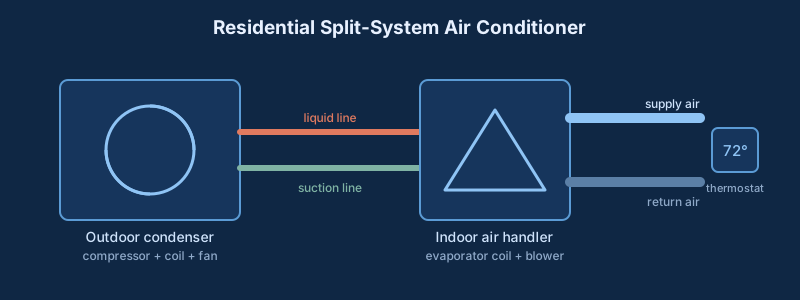
Once the equipment is selected, installation must be done carefully to ensure long-term performance. This includes removing the old unit, installing the new indoor and outdoor components, checking refrigerant charge, sealing connections, and testing thermostat operation. Ductwork should also be inspected for leaks or restrictions that could undermine the new system.
A quality contractor will verify airflow, temperature split, drainage, and humidity performance before completing the job. These final checks are critical in Tampa, where comfort depends as much on moisture removal as on air temperature.
AC installation costs in Tampa vary based on system size, efficiency, ductwork condition, and home layout. What moves the price at each level:
- Basic central AC replacement: a like-for-like swap on the existing pad, line set and ducts is the least involved installation.
- Mid-efficiency system installation: a higher SEER2 rating and often a two-stage compressor, which cost more up front and use less electricity through a long Florida cooling season.
- High-efficiency premium system: variable-speed compressors and blowers, communicating thermostats and better humidity control: the top tier of each brand's line.
- Ductwork repairs or modifications: priced separately, by how much duct has to be resized, sealed or replaced to carry the new system's airflow.
- Ductless mini-split installation: priced per zone. Each indoor head needs its own line set and mounting location.
Costs may also increase if electrical upgrades, permit requirements or difficult attic access add work to the job.
Talk to a licensed Blume technician
For federal efficiency ratings and rebate eligibility we point homeowners to ENERGY STAR heating & cooling rather than making those claims ourselves.
Call (727) 330-9131