First, Decide: Is This a Middle-of-the-Night Emergency?
Type 24 hour heating and air conditioning repair into a search bar and you are usually in one of two situations: something genuinely unsafe is happening in your house, or your comfort has collapsed and you want to know whether anyone will actually answer the phone. Both are fair reasons to call, but the right response to a burning smell is not the same as the right response to warm air drifting from the vents, so sort out which situation you are in first.
Call right away, any hour
Some failures are safety problems, not comfort problems. A burning or hot-plastic smell from the vents, a breaker that trips again the moment you reset it, sparking or smoke at the outdoor unit or air handler, or the smell of gas near a furnace all justify a middle-of-the-night call. So does a total loss of cooling during a Tampa Bay summer when someone in the house is elderly, an infant, or managing a medical condition that makes heat dangerous. A person answers the 24/7 dispatch line for exactly these calls.
Shut it down, then call
Grinding, screeching, or loud electrical buzzing from a running system means something mechanical or electrical is failing in real time. Every additional minute of runtime can turn a repairable part into a destroyed one. Switch the thermostat to off, then make the call. You have not made anything worse by shutting the system down; you have very likely made the repair smaller.
Safe to wait until morning, if you choose
Weak airflow that still cools, a glitchy thermostat, or a system limping along on a mild spring night is usually not an emergency. You can still call the moment you notice the problem, since a person answers the 24/7 dispatch line, holidays included, and simply book a daytime visit. Same-day response is available for no-cool calls, based on location and technician availability.
What to Do Before Help Arrives
Once you have called, there are a few things worth doing while you wait. None of them require tools or expertise, and each one either protects your home or helps the technician get to the actual repair faster.
Shut off power the right way
Turn the system off at the thermostat first. If anything smelled hot, or if the breaker has tripped, switch the air conditioner's breaker off at the electrical panel as well. Do not stand at the panel resetting a breaker that keeps tripping. A breaker that will not hold is telling you about an electrical fault, and forcing it can damage wiring or the compressor.
If you see water
Water around the indoor air handler usually means a clogged condensate drain, a common failure here because Florida humidity keeps the drain line running nearly year-round and growing algae. Shut the system off so it stops producing condensate, put towels down, and move anything water-sensitive away. If the air handler sits in a closet or attic, check whether water is reaching drywall or flooring; the water damage is often costlier than the HVAC repair itself.
If you smell burning or gas
For a burning or electrical smell, shut the system down at the breaker and leave it off until a technician has inspected it. A gas smell near a furnace is different: do not operate light switches or anything that can spark, get everyone out of the house, and call your gas utility from outside before you call anyone else. Heating problems that involve gas or combustion are the one category where you leave the building first and troubleshoot never.
Keeping People Safe While the House Heats Up
An HVAC failure in Tampa Bay is usually a heat problem, and heat inside a closed Florida house is not just uncomfortable. It can become a genuine medical risk for older adults, young children, and pets. While you wait for repair, manage the house deliberately instead of just enduring it.
Slowing the heat down in summer
Close blinds and curtains on the sunny side of the house, keep exterior doors shut, and run ceiling fans. Fans do not lower the temperature, but moving air helps sweat evaporate, which is how your body actually cools itself. Gather everyone in the coolest room and keep water within reach. If someone in the home is frail or medically fragile and the indoor heat keeps climbing, do not wait it out. Move them somewhere air-conditioned and let the repair happen behind them.
Cold nights and the space-heater trap
Gulf Coast cold snaps are short but real, and a dead heat pump on a windy January night makes a house cold in a hurry. Layering up and closing off one room to warm with a portable electric heater is reasonable, provided the heater sits on a hard floor away from bedding and curtains and plugs directly into the wall. Never use a gas oven, a grill, or any outdoor combustion device to heat indoor space. That is how carbon monoxide gets into homes.
What Happens When You Call (727) 330-9131 at 2 a.m.
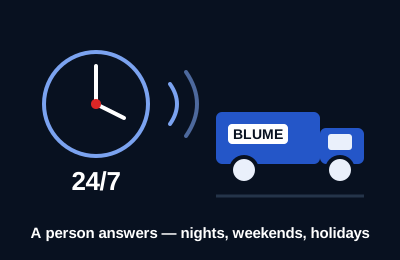
When you dial, a person answers the 24/7 dispatch line, at night, on weekends, and on holidays. That is the practical difference between a company that actually provides 24 hour heating and air conditioning repair and one whose answering service promises a callback. Blume Mechanical Service runs its dispatch this way because emergencies do not queue politely for business hours.
What to have ready
You do not need to diagnose anything, but a few details help: the brand on the unit, since we service all the major names including Carrier, Trane, Lennox, Rheem, Goodman, Daikin, York, and Bryant; what the system was doing when it failed; whether the breaker has tripped; and anything you have already tried. If you shut the system down because of a smell or a noise, say so. That detail changes what the technician loads on the truck.
Written, upfront pricing does not sleep either
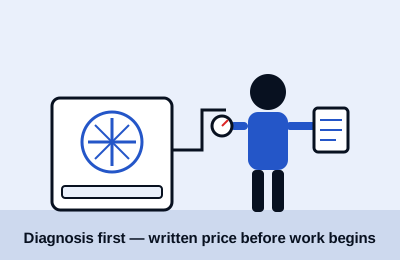
Emergency work follows the same rule as daytime work: you receive written pricing up front, and you approve it before any repair begins. A late-night failure is stressful enough without discovering the cost after the fact, and agreeing on the number first keeps a decision made at 2 a.m. from becoming a morning-after regret.
Why Tampa Bay Runs on Around-the-Clock HVAC Repair
There is a reason 24 hour heating and air conditioning repair is a survival requirement here rather than a marketing flourish. Tampa Bay systems work through a cooling season that stretches across most of the year, they keep running hard overnight in summer because the humidity never lets up, and along the coast in Clearwater, St Petersburg, Dunedin, and Palm Harbor, salt air quietly corrodes outdoor coils and electrical connections. Equipment that works this hard does not schedule its failures for business hours. Blume dispatches across Pinellas and Hillsborough County, covering Tampa, Clearwater, St Petersburg, Largo, Brandon, Dunedin, Palm Harbor, Seminole, and nearby communities from our headquarters in Belleair Bluffs.
Emergency Repair or Replacement? Honest Math at Any Hour
The middle of the night is the worst possible time to make a major equipment decision under pressure, and a trustworthy emergency contractor should never push you into one. The first job on an emergency call is to make the system safe and, wherever possible, restore your cooling or heat. If the failure turns out to be a large one on an aging system, the honest rule of thumb is simple: when a repair runs past half the cost of a new system on equipment near the end of its life, replacement usually wins.
The R-22 question
Age changes the math in one specific way. If your system still runs on R-22 refrigerant, that refrigerant has been phased out, which makes certain repairs on those systems increasingly impractical. The technician can tell you during the visit whether your unit falls into that category. Either way, you will see the price and the reasoning in writing, and a decision this large can wait for daylight. Stabilizing the situation cannot, and that part happens on the spot.
After the Emergency Passes
Blume Mechanical Service, LLC has been in the climate business since 2009, holds Florida license #CAC-1822618, which you can verify through the Florida DBPR, and is fully insured. The technicians who show up at night are experienced. Emergency repair is what happens after prevention has already failed, and the better outcome is never needing the midnight call at all.
Turning this emergency into your last one
Many of the failures that end in a frantic search for 24 hour heating and air conditioning repair begin as small, findable problems: a drain line starting to clog, a capacitor drifting out of spec, a coil fouling in the salt air. A maintenance plan covers two tune-ups a year, priority scheduling when something does go wrong, discounted repairs, and a documented service history for each unit. That history also becomes the record that keeps the repair-or-replace math honest the next time a big decision comes around.