
HVAC, explained
AC Won't Turn Off: Why a System Runs Past Its Setpoint
An air conditioner that will not turn off is one of three different problems wearing the same disguise. If only the indoor fan runs continuously while cooling still cycles, the thermostat fan switch is set to ON instead of AUTO, which is a setting, not a fault. If the system cools past its setpoint or ignores the thermostat, the thermostat itself, its wiring, or a control relay is the likely culprit. If the outdoor unit keeps running even with the thermostat switched off entirely, the contactor in the outdoor unit has likely stuck closed and is feeding the compressor power directly; shut off the outdoor unit's breaker and call a professional, because a stuck contactor keeps the compressor running with nothing supervising it.
A system that will not shut off is stranger to live with than one that will not start, because the house may be getting colder and colder while the equipment ignores every instruction. The good news is that this symptom sorts cleanly into a small number of causes, one of which is not a malfunction at all, and the sorting can be done from the thermostat and a walk outside. This guide separates the three cases, explains the mechanism behind each, covers the heating-season version of the same problem, and draws the one distinction that saves the most confusion: the difference between a system that will not stop and a system that simply cannot keep up.
First, check the fan switch: ON versus AUTO
Before treating this as a malfunction, look at one setting, because the most common version of an air conditioner that never turns off is not broken at all. Thermostats control two things separately: the cooling itself, and the indoor blower fan that circulates air. The fan has its own switch with two positions. In AUTO, the fan runs only when the system is actively cooling or heating, so the whole system starts and stops together. In ON, the fan runs continuously, around the clock, whether or not any cooling is happening. A thermostat that has been bumped to ON, or set there deliberately and forgotten, produces exactly the symptom that brings people to this page: air moving from the vents at all hours, a blower that never goes silent, and the reasonable conclusion that the air conditioner will not shut off. The test takes seconds. Put your hand near a supply vent while the system is running. If the air is cool, cooling is genuinely active; if the air is roughly room temperature and simply moving, you are feeling the fan alone, and the compressor outside has almost certainly cycled off exactly as it should. Confirm by checking the fan switch and setting it to AUTO, at which point the blower should stop within moments of the next cooling cycle ending. It is worth saying that ON is a legitimate setting some people choose on purpose, for steadier air mixing or continuous filtration. But in a humid climate it carries a real cost beyond electricity: when the cooling cycle ends, the indoor coil is wet with the moisture it just removed from the air, and a continuously running fan blows air across that wet coil and re-evaporates a portion of the moisture back into the house. Continuous fan operation can therefore make a home feel clammier even while the thermostat reads the right temperature. If the fan switch was the whole story, you are done. If the switch is on AUTO and something still refuses to stop, continue, because the remaining cases are real faults.
Cooling past the setpoint: when the thermostat loses its authority
The second case is a system that keeps actively cooling below the temperature you asked for, or seems to ignore setpoint changes altogether. The thermostat's entire job is to compare the air temperature it senses against the setpoint and open or close a low-voltage circuit accordingly, so when cooling runs past the setpoint, either the thermostat is misjudging the temperature, or its instruction is not reaching the equipment cleanly. Misjudgment comes first. A thermostat mounted where it reads warmer than the rest of the house, in direct sun for part of the day, near a heat-producing appliance, above a lamp, or on a wall with a hot attic behind it, will honestly report a warm reading and honestly keep calling for cooling while the actual living space overshoots. A thermostat with a drifting or failing sensor does the same thing without the environmental excuse. The signature of a sensing problem is disagreement: a separate thermometer placed near the thermostat reads noticeably different from what the thermostat displays. Instruction problems come next. The thermostat closes a switch; if that switch sticks closed, whether it is an aging mechanical mechanism or a failed relay inside a digital unit, the call for cooling never ends no matter what the display says. Wiring can do the same job of lying: a cooling wire whose insulation has worn through can short against another conductor, holding the cooling circuit closed as if the thermostat were commanding it. There are two useful homeowner tests here, both safe. First, raise the setpoint well above room temperature and wait a few minutes; a healthy system should stop. Second, if it does not, switch the thermostat to OFF entirely. If cooling stops when the thermostat is OFF but would not respect the setpoint, suspect the thermostat itself, and our guides to how thermostats work and the signs of a failing thermostat go deeper. If the system keeps running even with the thermostat OFF, the problem is downstream of the thermostat, and that is the third case.
The outdoor unit that won't stop: a stuck contactor
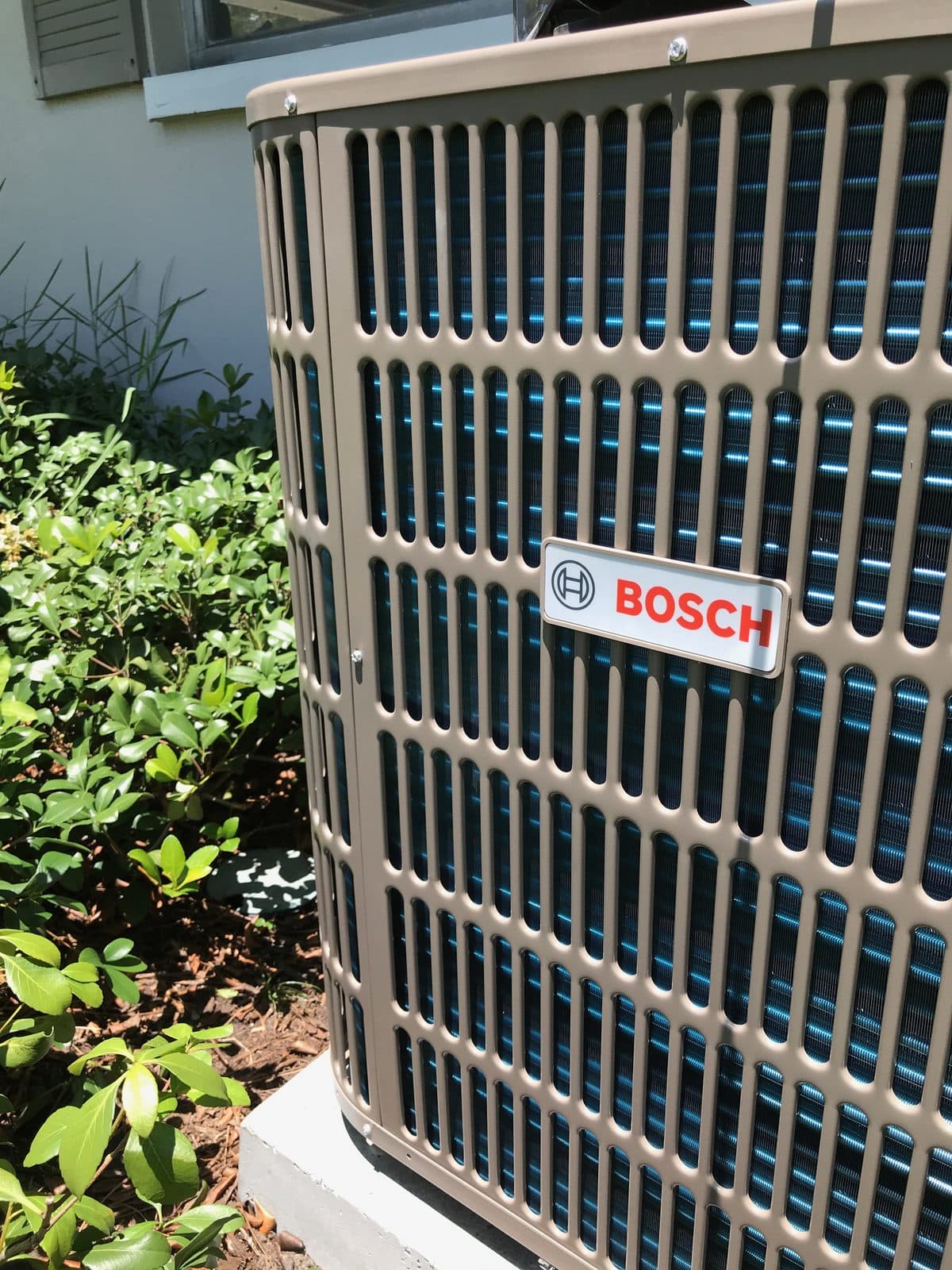
The third case is the one that most deserves prompt action. If the outdoor unit continues running even when the thermostat is switched OFF, the instruction chain has been bypassed physically, and the usual culprit is the contactor. The contactor is a heavy-duty electrical switch inside the outdoor unit: when the thermostat calls for cooling, a low-voltage signal energizes a coil, the coil pulls the contacts closed, and line voltage flows to the compressor and condenser fan. When the call ends, a spring is supposed to pull the contacts open again. Contactors spend their lives making and breaking the largest electrical load in the house, and every switching event produces a small arc that pits and roughens the contact faces. Over years, those faces can weld themselves together, or debris and even insects, which are notoriously drawn into contactors, can jam the mechanism. Either way the result is contacts that stay closed on their own, which means the compressor and outdoor fan are being fed power directly, with the thermostat reduced to a spectator. This is worth taking seriously for a specific reason: the system's normal supervision has been cut out of the loop. A compressor that runs continuously regardless of commands can keep running through conditions it would normally be protected from, short cycling against pressures, running with the indoor blower off, or operating while the indoor coil ices over, and nothing is watching. The homeowner-safe response is clear and limited: go to the electrical panel, switch off the breaker for the outdoor unit (there is often also a disconnect box mounted on the wall beside the unit, and the breaker inside the panel is the surer choice), confirm the outdoor unit has actually stopped, and call a professional. Do not open the outdoor unit to inspect or tap the contactor; everything inside that cabinet is line voltage, and the capacitor beside the contactor stores a dangerous charge even after power is cut. Contactor replacement is routine, quick work for a technician, and it is one of the failures that periodic maintenance tends to catch early, since a pitted contactor face is visible during an inspection before it ever welds shut.
When it's the heat that won't quit
The heating version of this problem deserves its own treatment, because the plumbing of the fault is similar but the components differ, and in a heat pump climate there is one extra twist. If the heat will not shut off, run the same sorting logic as for cooling. First the fan test: warm-ish, room-temperature air moving at all hours is likely just the fan set to ON. Then the setpoint test: drop the setpoint well below room temperature and wait; then the OFF test. A thermostat that misreads cold, because of a failing sensor or a mounting spot on a chilly exterior wall or in a draft, will keep calling for heat exactly the way a hot-wall thermostat keeps calling for cooling, and a stuck relay or shorted heating wire holds the heat circuit closed the same way. In a furnace, there is an additional suspect the cooling side does not have: the limit switch and fan control. A furnace is designed to keep its blower running after the burners shut off, to move the remaining heat out of the heat exchanger, so a blower that runs for a stretch after the heat stops is normal, not a fault. But a furnace whose blower never stops, or that keeps firing past the setpoint, may have a fan limit control stuck in the run position or a control board holding a relay closed, and a furnace that is overheating its heat exchanger will cycle on its high-limit switch, a pattern that needs professional attention rather than tolerance. Heat pumps add the twist: in heating mode, the same outdoor unit, compressor, and contactor are doing the work, so a welded contactor produces a heat-that-will-not-stop symptom in winter exactly as it produces endless cooling in summer, and the same response applies, breaker off, professional in. Electric heat strips also have their own relays, called sequencers, which can stick closed and keep strips energized; that failure shows up as heat that overshoots and as surprising electricity consumption, and it is likewise line-voltage territory. The sorting tests are the same in every season; only the components behind them change.
Running constantly is not the same as refusing to stop
There is one situation that looks like this problem and is not, and it causes more unnecessary worry than any real fault: the system that runs continuously on a hot afternoon while the house sits a little above the setpoint. That is not a control failure. An air conditioner has a fixed capacity, sized for the home under something close to the hottest conditions the location normally sees, and on days at or beyond that design condition, the heat entering the house through walls, windows, roof, and infiltration roughly matches what the system can remove. The result is a system that runs without stopping, not because it is ignoring the thermostat but because it never reaches the setpoint that would let it stop. The distinguishing test is simple and honest: does the system respect commands? If raising the setpoint or switching to OFF stops it, the controls are fine, and what you are seeing is a capacity-versus-load situation, the equipment working at its limit on a day at the edge of what it was sized for. Long run times in that circumstance are not harmful in themselves; air conditioners are built for sustained operation, and a long steady cycle is gentler on the equipment than rapid stopping and starting. It only becomes worth investigating when the pattern changes, a house that used to hold its setpoint on hot days and now cannot, which points less at controls and more at eroding capacity: a low refrigerant charge, a dirty coil, a struggling compressor, or ductwork leaking cooled air into the attic. It can also point at a load that grew, more people, more appliances, a degraded attic insulation layer. If the house is cool but never crisp, and especially if it feels sticky, that is its own distinct symptom with its own guide. The line to hold onto is this: a control fault disobeys, a capacity limit obeys but falls short, and the two call for entirely different responses.
Frequently asked
My AC runs all the time but the house is cool. Is something broken?
Check the thermostat fan switch first. If it is set to ON rather than AUTO, the indoor blower runs continuously even though cooling is cycling normally, and that is a setting, not a fault. Feel the air at a vent: room-temperature moving air means fan only. In a humid climate, AUTO is usually the better choice, because a continuously running fan re-evaporates moisture off the wet indoor coil and can make the house feel clammy.
The outdoor unit keeps running even when I turn the thermostat off. What should I do?
That points at a stuck or welded contactor, meaning the outdoor unit is receiving power directly and the thermostat can no longer stop it. Switch off the breaker for the outdoor unit at the electrical panel, confirm the unit has stopped, and call a professional. Do not open the unit yourself; everything inside is line voltage, and the capacitor holds a dangerous charge even with power off. Contactor replacement is routine work for a technician.
Why does my AC cool the house below the temperature I set?
Either the thermostat is misreading its environment or its instruction is stuck on. A thermostat in sun, near a heat source, or on a hot wall reads warm and keeps calling for cooling while the living space overshoots. A failing sensor does the same thing. Alternatively, a stuck relay inside the thermostat or a shorted cooling wire can hold the call closed. If it stops when switched to OFF, suspect the thermostat; if it does not, suspect the contactor.
My heat won't turn off. Is that the same problem?
Usually a close cousin. The same sorting applies: fan switch first, then setpoint and OFF tests. Furnaces add their own suspects, a stuck fan limit control or a control-board relay, and note that a blower running for a stretch after the burners stop is normal heat-exchanger cooldown. In a heat pump, the same outdoor contactor that causes endless cooling in summer causes endless heating in winter, and the response is the same: breaker off, then professional diagnosis.
Is it bad for the AC to run for hours without stopping on a hot day?
Not in itself. If the system obeys the thermostat but simply never reaches the setpoint on the hottest afternoons, it is running at its capacity limit, and sustained steady operation is gentler on equipment than rapid cycling. It becomes worth investigating when the pattern changes, a house that used to hold setpoint and no longer does, which suggests eroding capacity from a refrigerant leak, dirty coils, or duct losses rather than a control problem.
Do I need to call a pro for this?
Maybe. First rule out the setting: a thermostat left on continuous fan, or in a mode that holds a call, looks exactly like a system that will not stop. If the setpoint is satisfied and the equipment keeps running, something is holding the call in - a stuck control, a wiring fault or a thermostat failure - and that is a licensed contractor's diagnosis. Do not leave it running for days while you decide.
Related
- How a thermostat works
- Signs a thermostat is going bad
- House humid with the AC running
- AC troubleshooting guide
Blume Mechanical Service is a licensed commercial and residential HVAC contractor serving Florida's Tampa Bay region (CAC-1822618). If your system has stopped obeying its thermostat — especially if the outdoor unit runs with the thermostat off — shut the breaker off and let us take it from there.
Last updated: 2026-11-05
Sources: General HVAC engineering principles (contactor and relay operation, thermostat control circuits, latent moisture behavior on cooling coils) · US Department of Energy — thermostat operation and air conditioner components · Standard residential electrical safety practice for HVAC equipment (generalized, no model-specific claims)